Tello Stick: A Fresh Take on Handwritten Fonts for Modern Designers
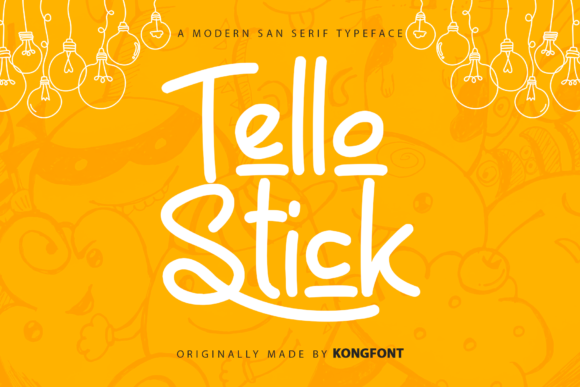
There’s a certain warmth that a handwritten font brings to a project. It feels personal, immediate, and human. In a world saturated with sleek sans serifs and authoritative serifs, a well-crafted script font like Tello Stick offers a refreshing change of pace. It’s not trying to be overly formal or historically accurate. Instead, it leans into a modern, playful aesthetic that feels both approachable and stylish. This typeface, created by Kong Font Studio, strikes a balance between casual charm and professional polish, making it a versatile tool in any designer’s or crafter’s toolkit.
What sets Tello Stick apart is its visual personality. The letterforms have a natural, flowing rhythm, as if sketched with a steady hand and a quality pen. You’ll notice subtle variations in stroke weight and a slight baseline shift that gives it an authentic, hand-lettered feel without sacrificing legibility. It’s a creative font that avoids the extremes of being too messy or too rigid. This makes it particularly effective for projects where you want to convey friendliness, creativity, and a touch of elegance. Think of it as a display font with a heart—it’s designed to be seen and to make an emotional connection.
Where Tello Stick Truly Shines: Practical Applications
The real test of any premium font is how it performs in the wild. Tello Stick is a workhorse for a variety of design contexts, especially those requiring a personal touch. For logo design and brand identity, it can be the perfect choice for a boutique, a creative agency, a wedding planner, or a lifestyle blog. It injects personality into a brand mark, helping a business stand out with a signature look that feels bespoke rather than off-the-shelf.
In the realm of editorial design and packaging design, this handwritten font excels. Imagine it on the cover of a recipe booklet, the label of an artisanal jam, or the header of a magazine feature about DIY crafts. Its friendly demeanor makes content more inviting. For digital spaces, it’s a standout for social media graphics, Instagram quotes, YouTube thumbnails, and Pinterest pins. It grabs attention in a fast-scrolling feed because it feels different from the standard system fonts. Of course, its roots in crafting mean it’s a natural fit for wedding invitations, thank you cards, greeting cards, and any printable art where a handmade aesthetic is desired.
Making It Work: Font Pairing and Readability
Using a script font effectively requires some thoughtful consideration, particularly with font pairing. The flowing nature of Tello Stick means it pairs beautifully with clean, simple typefaces. A classic sans serif font like Montserrat or Lato provides a perfect counterbalance, offering clarity for body text while letting the script headline. For a more traditional or elegant feel, a light, readable serif font like Playfair Display can create a sophisticated hierarchy. The key is contrast—let Tello Stick be the star of headlines, logos, or pull quotes, and use its partner for longer paragraphs to ensure overall readability.
Speaking of readability, it’s crucial to consider context. Tello Stick is a display font, meaning it’s optimized for larger sizes. At small point sizes, especially in dense blocks of text, its charm can become a hindrance. Always test it at the intended size. Is the word still clear at a glance? If you’re using it for a website heading, check how it renders on different screens. For print projects like business cards or invitations, print a sample. The included styles and glyphs are also worth exploring—does the font offer alternates or ligatures that can add even more character to your specific words?
Finally, understanding the licensing is non-negotiable for commercial projects. Fonts like Tello Stick are design assets that come with specific terms. Kong Font Studio, available on platforms like Creative Fabrica, provides clear licensing for commercial use, which is essential for entrepreneurs, marketers, and small business owners. Always review the license to ensure your intended use—whether for a client’s logo, merchandise, or digital product—is covered. This due diligence protects your work and supports the creators who make such modern typography tools possible.